

The Nest: Creating a Nature Space in an Urban EYFS Setting
A practical look at transforming a concrete outdoor area to support wellbeing, communication and early science.
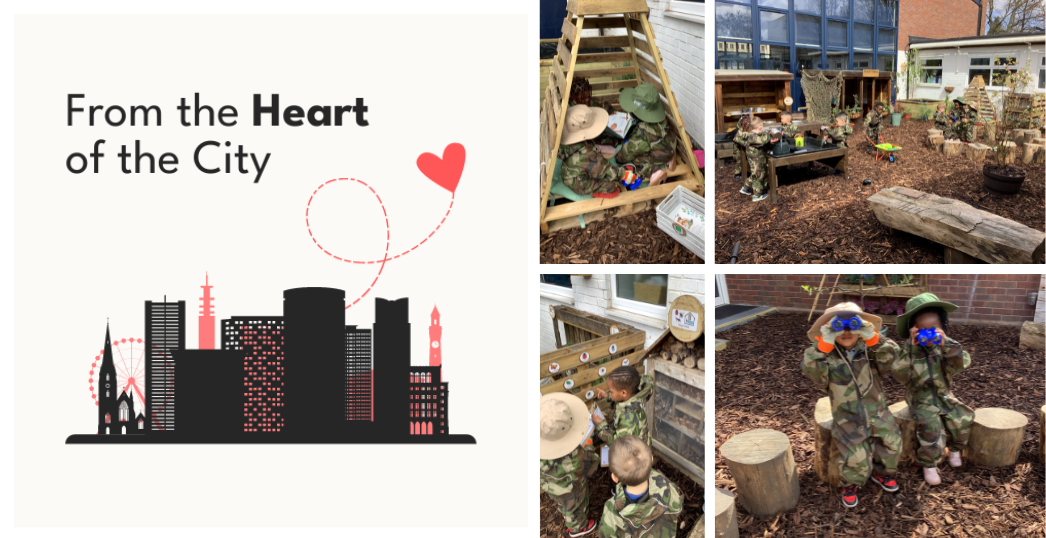
From the Heart of the City is our blog series sharing early years practice from across Birmingham.
Are you doing something in your setting that you’d like to share with the community? We’d love to hear about it — get in touch today!
The Starting Point
In a busy Birmingham setting, outdoor space can often mean one thing: concrete.
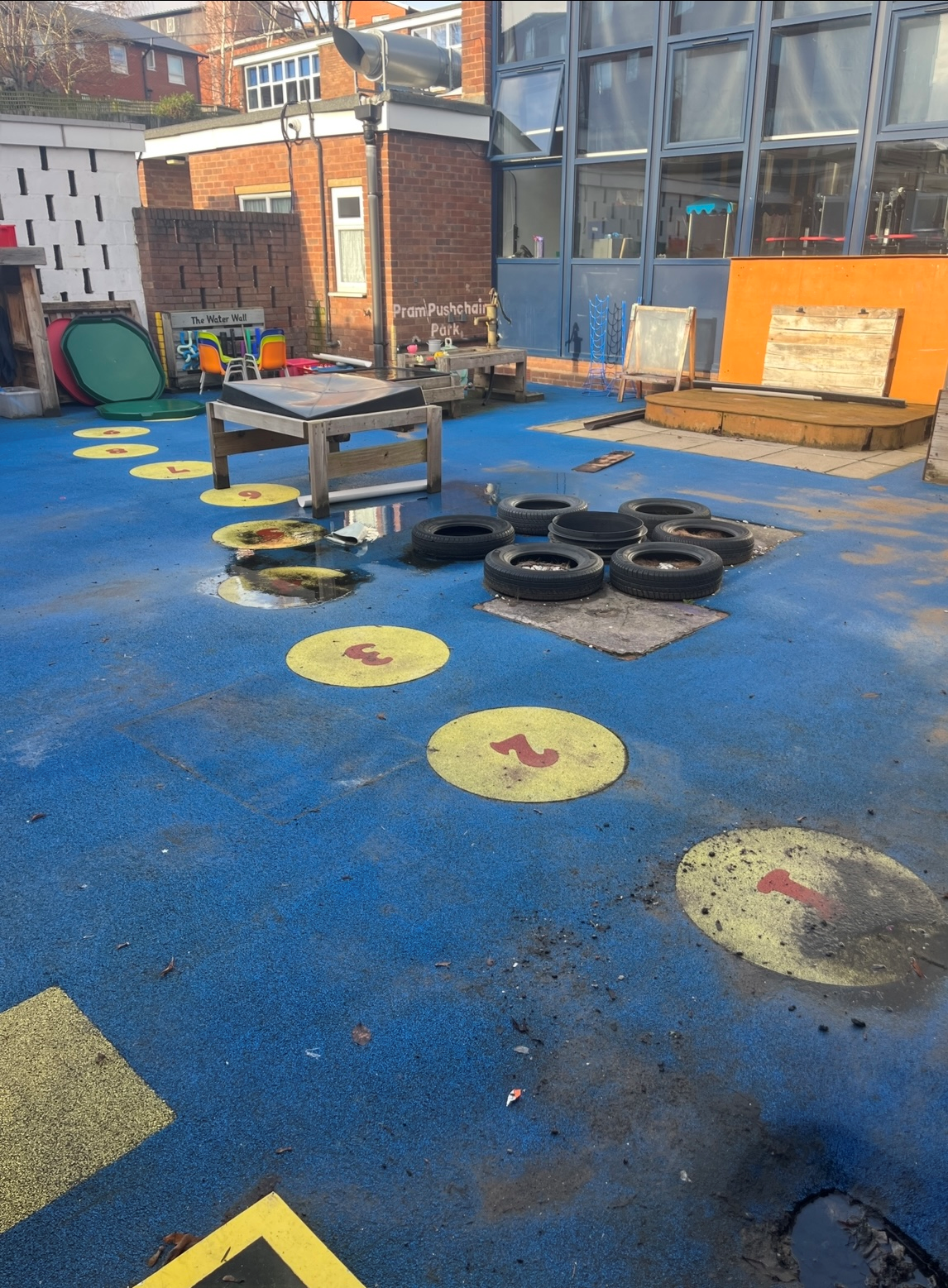
The outdoor space at St Catherine of Siena Catholic Primary School (Nursery) before the creation of The Nest.
That was certainly the case for us.
Our children had space to play, but not always space to explore, reflect or connect with the natural world. At the same time, we were noticing increasing needs around communication, engagement and emotional regulation, particularly for children who found the classroom environment overwhelming.
Like many settings across the city, we were working with limited green space but increasing need.
We didn’t have fields, trees, or woodland to work with. But we did have a question: What could we create that would make a real difference, using the space we already had?
That question became the starting point for The Nest, a small, nature-based area designed to support wellbeing, spark curiosity, and give children meaningful, real-life experiences to talk about.
Starting Small
The idea for The Nest came from wanting to create a space that felt different from the rest of the playground. Somewhere quieter, more natural, and more purposeful.
We began with a small section of the outdoor area and focused on a few key elements:
Natural seating using logs and wooden slices
Simple planting areas with herbs and sensory plants
A small pond to observe changes over time
Loose natural materials to encourage open-ended play
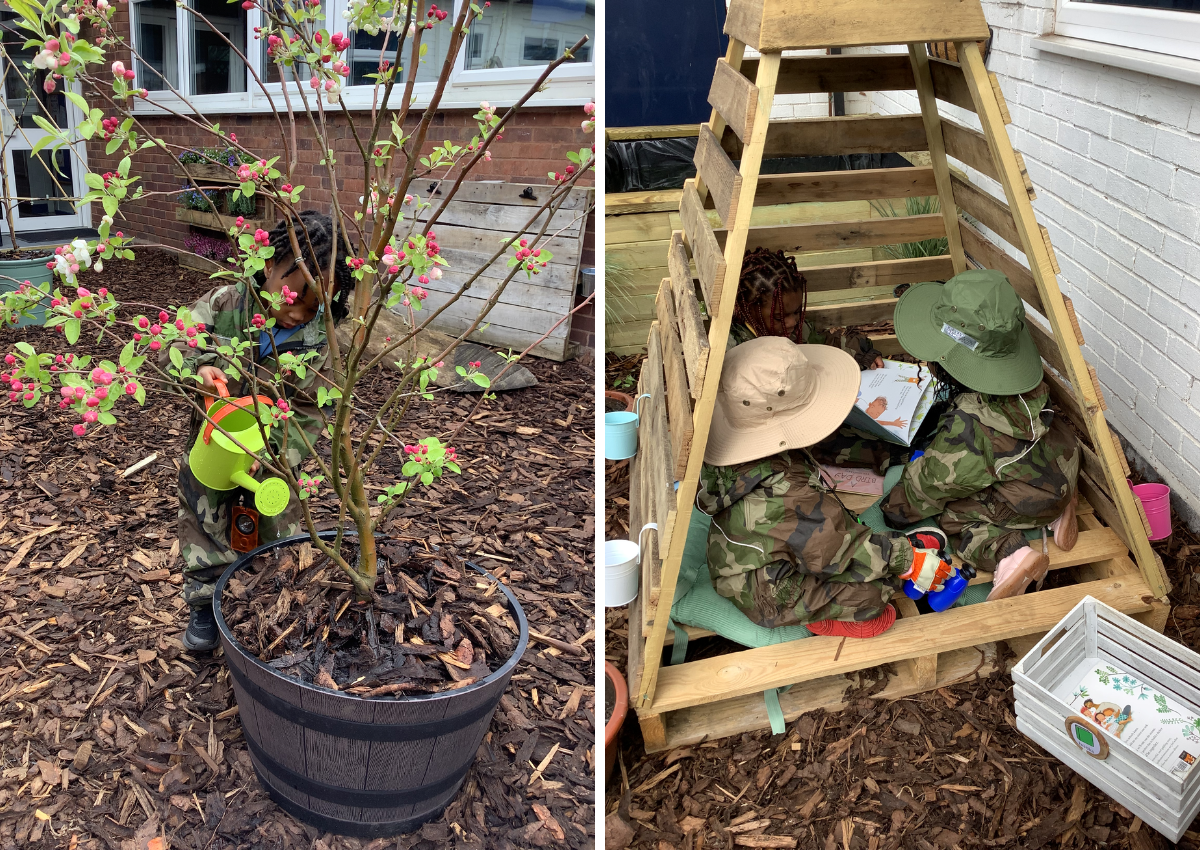
A ‘Ranger Station’ to promote responsibility and care for the environment
Nothing was overly expensive or complicated. Some of the most effective parts of the space came from repurposed or donated materials.
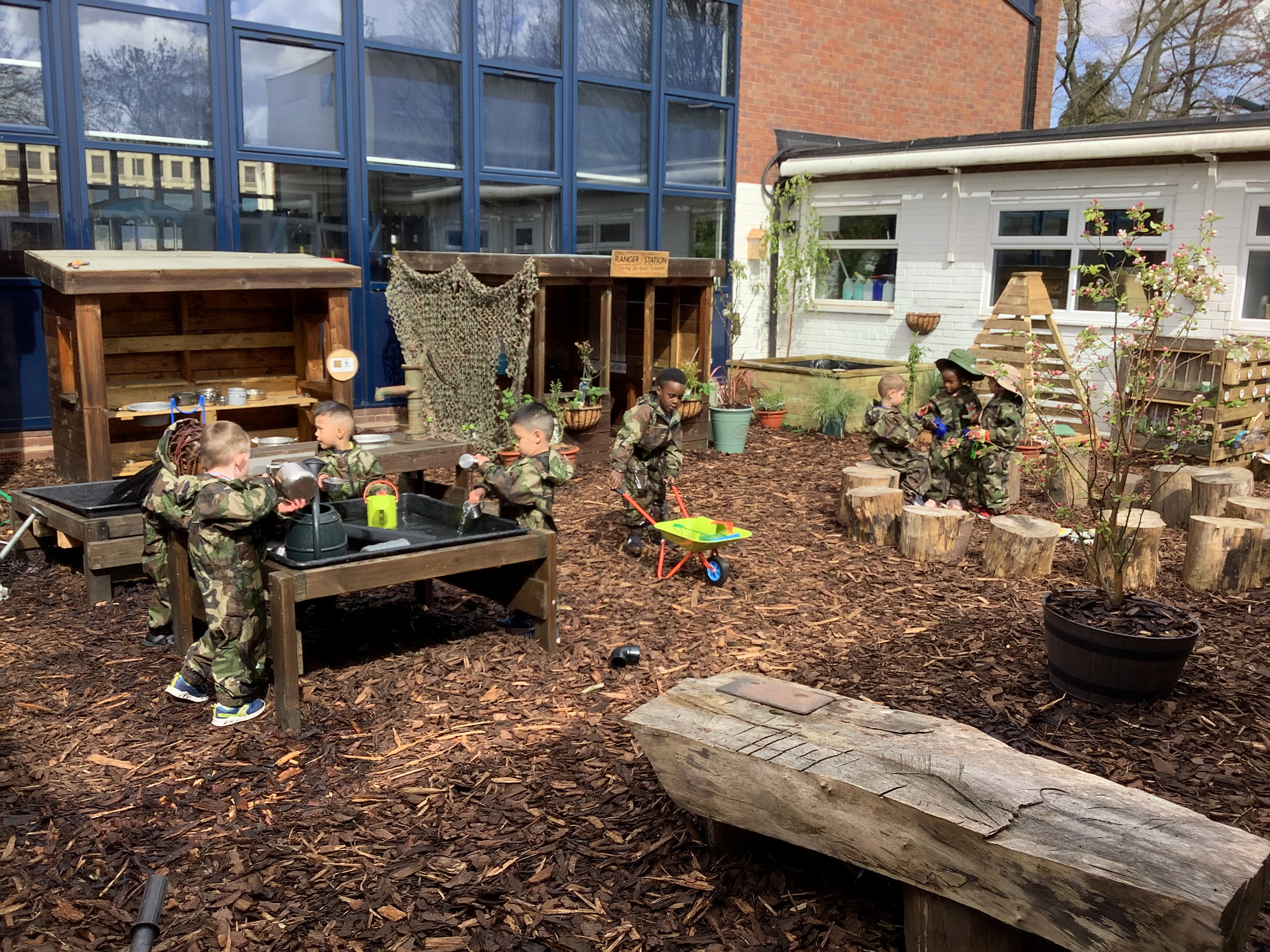
The Nest at St Catherine of Siena Catholic Primary School (Nursery)
Making It Part of Everyday Practice
One of the biggest shifts wasn’t just the space itself, but how it was used. Rather than becoming a ‘special activity’, The Nest is now part of daily provision.
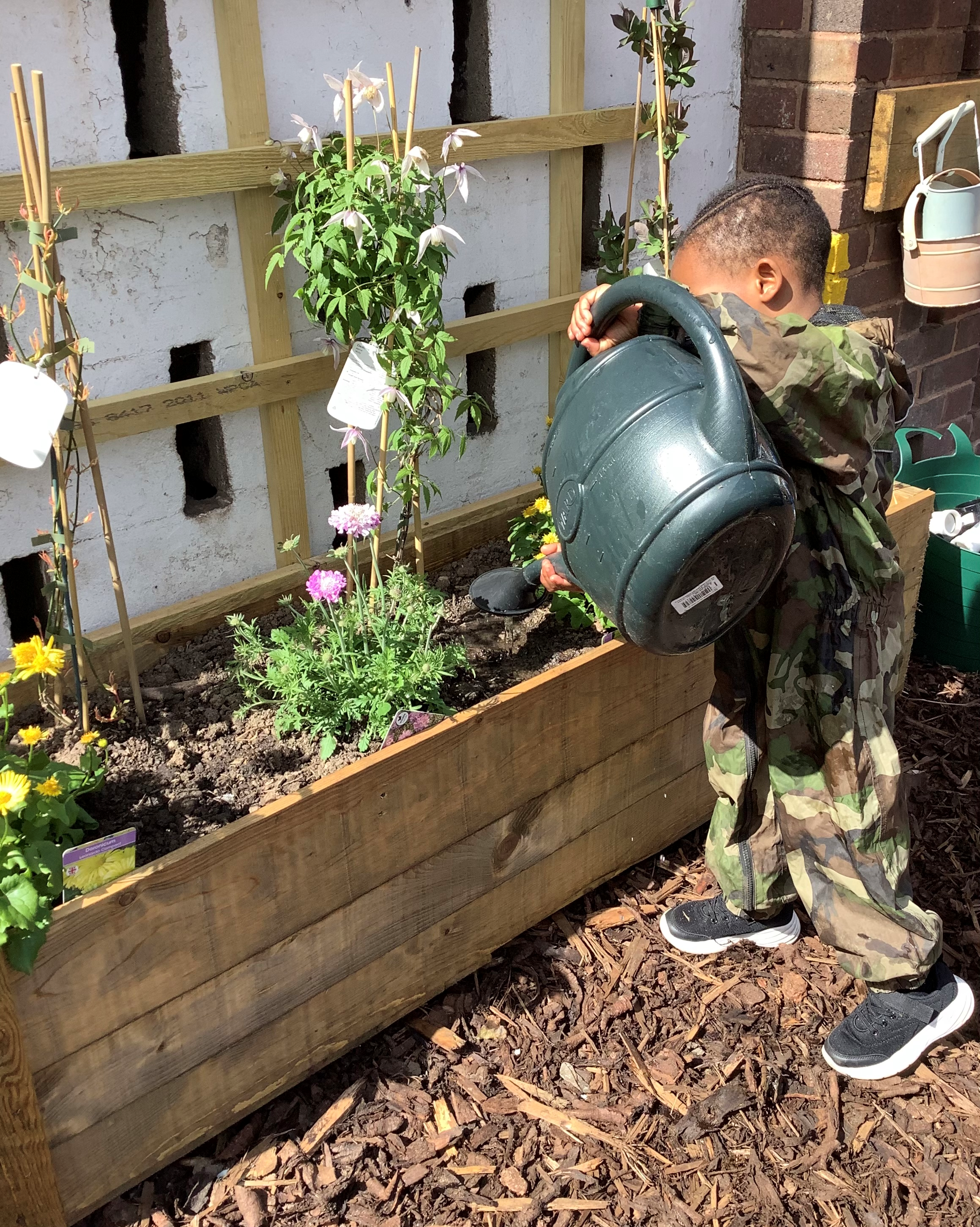
Nursery and Reception use it as an extension of the classroom, and it is also accessed by older children across the school.
This might look like:
Small group work taking place outside
Children exploring independently during continuous provision
Adults joining play and extending language through real experiences
Quiet time for children who need space to regulate
Keeping it flexible has been key. It is not about planning something new, but about using the space in meaningful ways.
Supporting Communication Through Real Experiences
One of the most noticeable impacts has been on children’s communication.
In the classroom, it can sometimes be difficult to create meaningful contexts for talk.
In The Nest, this happens naturally. Children are:
Searching for minibeasts
Checking on plants and noticing changes
Observing the pond
Talking about what they can see, feel, and hear
These shared, real experiences give children something concrete to talk about. We have seen more sustained interactions, particularly for quieter children or those with emerging language.
Simple Scientific Enquiry in EYFS
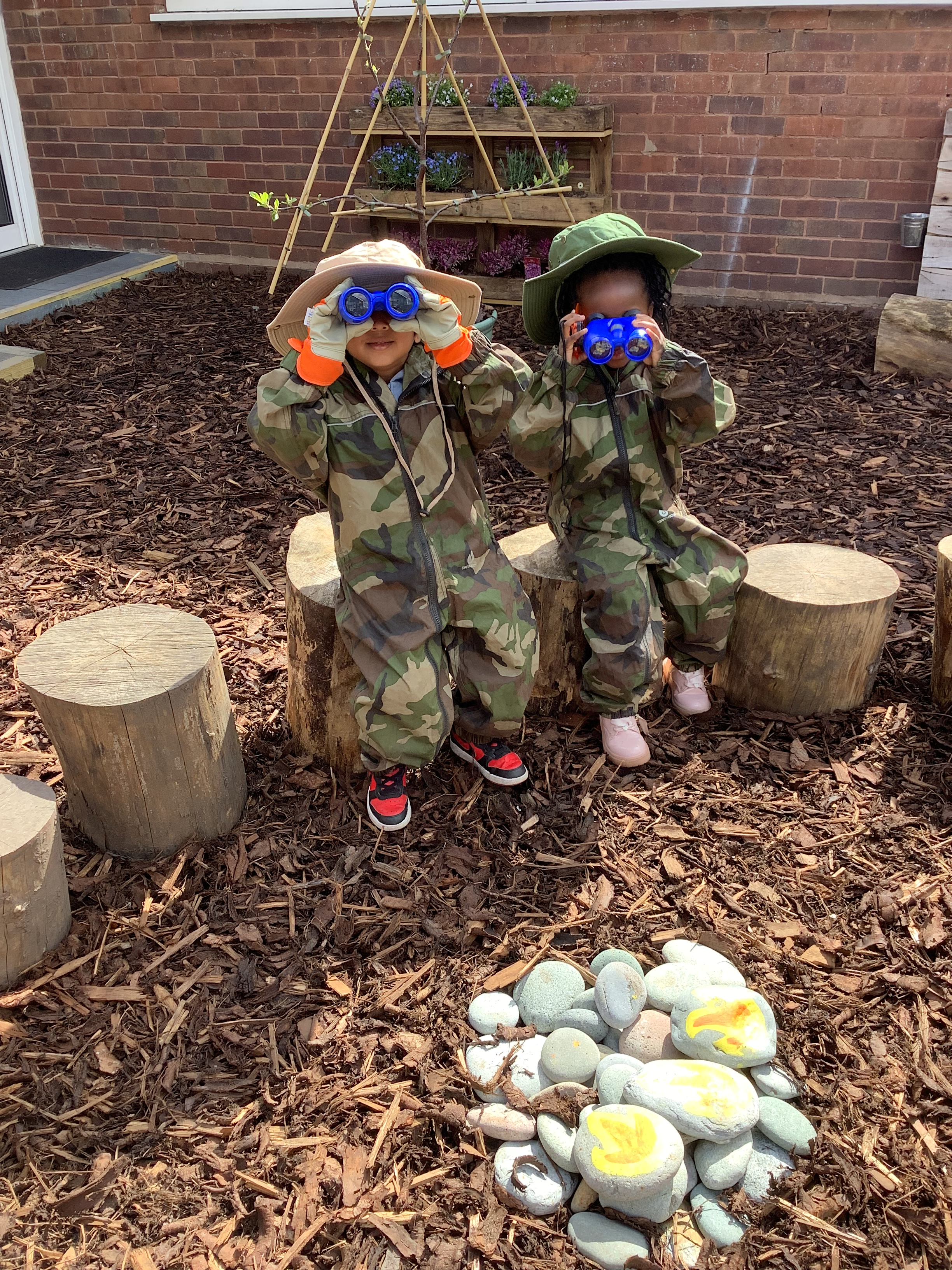
The space has also created opportunities for early scientific thinking in a way that feels natural and accessible.
We are not running formal lessons, but children are:
Noticing patterns and changes over time
Asking questions about the natural world
Making simple observations
Beginning to care for living things
By embedding this into play and exploration, it becomes part of how children experience the world rather than something separate.
What We Have Noticed
Since developing The Nest, we have seen:
Increased engagement, especially from children who struggle indoors
More sustained shared thinking during play
Improved communication linked to real experiences
A calmer environment that supports emotional regulation
For some children, this space has made a significant difference to how they access learning.
Challenges Along the Way
Like any project, there were challenges!
Budget was one of the main considerations. We addressed this by using a combination of small grants and repurposed materials. It showed us that impactful changes do not always require large budgets.
Space limitations were also a factor. Being in an urban setting meant working creatively with what we had rather than trying to replicate a larger outdoor environment.
Staff confidence was another important element. Keeping the approach simple and rooted in everyday practice helped staff feel more comfortable using the space.
Top Tips for Getting Started
For settings thinking of developing something similar:
Start small and build over time
Focus on purpose rather than appearance
Use natural and open-ended resources
Keep it part of daily provision, not an add-on
Do not overcomplicate it
REMEMBER: You do not need a large outdoor area to create meaningful opportunities for children!
Final Reflections
The Nest has not changed the size of our outdoor space, but it has changed how we use it.
In a busy Birmingham setting where space is limited, creating even a small area for nature, curiosity, and calm has made a noticeable difference.
Children who once struggled to engage are now leading their own exploration, starting conversations, and finding moments of quiet when they need them.
It has not required a large budget or a complete redesign, just a shift in thinking about what outdoor space can be.
Because even in the most urban environments, there is always room to create something meaningful.
Blog author: Louise Wilde, St Catherine of Siena Catholic Primary School

Louise Wilde is an EYFS teacher, Forest School Lead and Science Lead at St Catherine of Siena Catholic Primary School in Birmingham.
She is particularly passionate about outdoor learning and the role nature can play in supporting children’s wellbeing, communication and curiosity.
Louise led the development of The Nest, a nature-based outdoor space designed to bring meaningful outdoor learning into an urban setting.